Magazine depth
“There’s no doubt that whatever it’s going to be called, it won’t be called Golden Dome.”
Israeli air defense systems are activated to intercept Iranian missiles over Tel Aviv amid a barrage of Iranian rockets on June 16, 2025. The name of the Trump administration's Golden Dome missile defense shield is a nod to Israel's Iron Dome, but the US version would include Space-Based Interceptors and must protect a much larger geographic area. Credit: Menahem Kahana/AFP via Getty Images
Two of the top lawmakers backing the Pentagon’s Golden Dome missile defense shield are among the wave of Republicans leaving Congress in the coming Democratic takeover, raising questions about the future of President Donald Trump’s signature second-term defense initiative.
The shakeup on Capitol Hill comes after military officials signaled in recent months that they might backpedal from one element Trump asked for in Golden Dome: the capability to shoot down missiles in their initial boost phase shortly after launch.
The Golden Dome has escaped serious congressional scrutiny since Trump announced the program in January 2025, one week into his second term in the White House. That lack of scrutiny will change as Democrats take responsibility for writing the Pentagon’s budget, introduce limits on funding, and put forth bills to strip out Golden Dome’s most controversial component and give the program a new name.
That’s the opinion of a half-dozen current and former officials in industry and government. Ars spoke with sources before and after last week’s congressional elections to get a sense of how a new Democratic Congress might make its imprint on missile defense.
It’s important to know that much of what the Trump administration calls “Golden Dome” was already in development (or in some cases, operational) when Trump signed the executive order outlining the initiative 22 months ago. Trump’s order created a new program to consolidate the Pentagon’s existing missile defense efforts, accelerate work already underway on new Ground-Based Interceptors (GBIs), and deploy a new layer of orbiting sensors and Space-Based Interceptors (SBIs) to defend the US homeland against both traditional ballistic missiles and new emerging threats like drones and hypersonic weapons.
Ramming it through
The Golden Dome was immediately politicized. The first tranche of its funding—approximately $24 billion—was part of Trump’s so-called “One Big Beautiful Bill,” along with some of the White House’s other contentious policy priorities. The bill passed Congress on a party-line vote. This meant the budget for Golden Dome was not part of the normal military budgeting process in Congress, which usually involves both parties. Instead, it passed Congress through a controversial shortcut known as reconciliation.
Sen. Mike Rounds (R-S.D.) said in a September hearing that the White House’s decision to link Golden Dome’s first tranche of funding to a partisan reconciliation bill was unnecessary. “This should have been on a bipartisan basis,” Rounds said. Indeed, Capitol Hill Republicans refused the Trump administration’s effort to add $350 billion to the Pentagon’s budget this year through a similar reconciliation mechanism.
Lawmakers also formed an all-Republican “Golden Dome Caucus” soon after the unveiling of Golden Dome. Seven House members of the caucus either lost their reelection bids or did not run for reelection at all in the 2026 midterms. These include the caucus’s co-chair, Rep. Jeff Crank (R-Colo.), and the chair of the House subcommittee overseeing Golden Dome, Rep. Scott DesJarlais (R-Tenn.). Both are among the Golden Dome’s biggest cheerleaders in Congress.
The Democratic ranking member of the House Subcommittee on Strategic Forces, Rep. Scott Moulton (D-Mass.), is retiring from Congress. That leaves Rep. John Garamendi (D-Calif.) as the next-senior Democrat on the subcommittee, with a path to becoming chairman when the new Congress convenes in January. In remarks earlier this year, he called Golden Dome a “massive, extraordinarily expensive, and ultimately inadequate defensive system.”
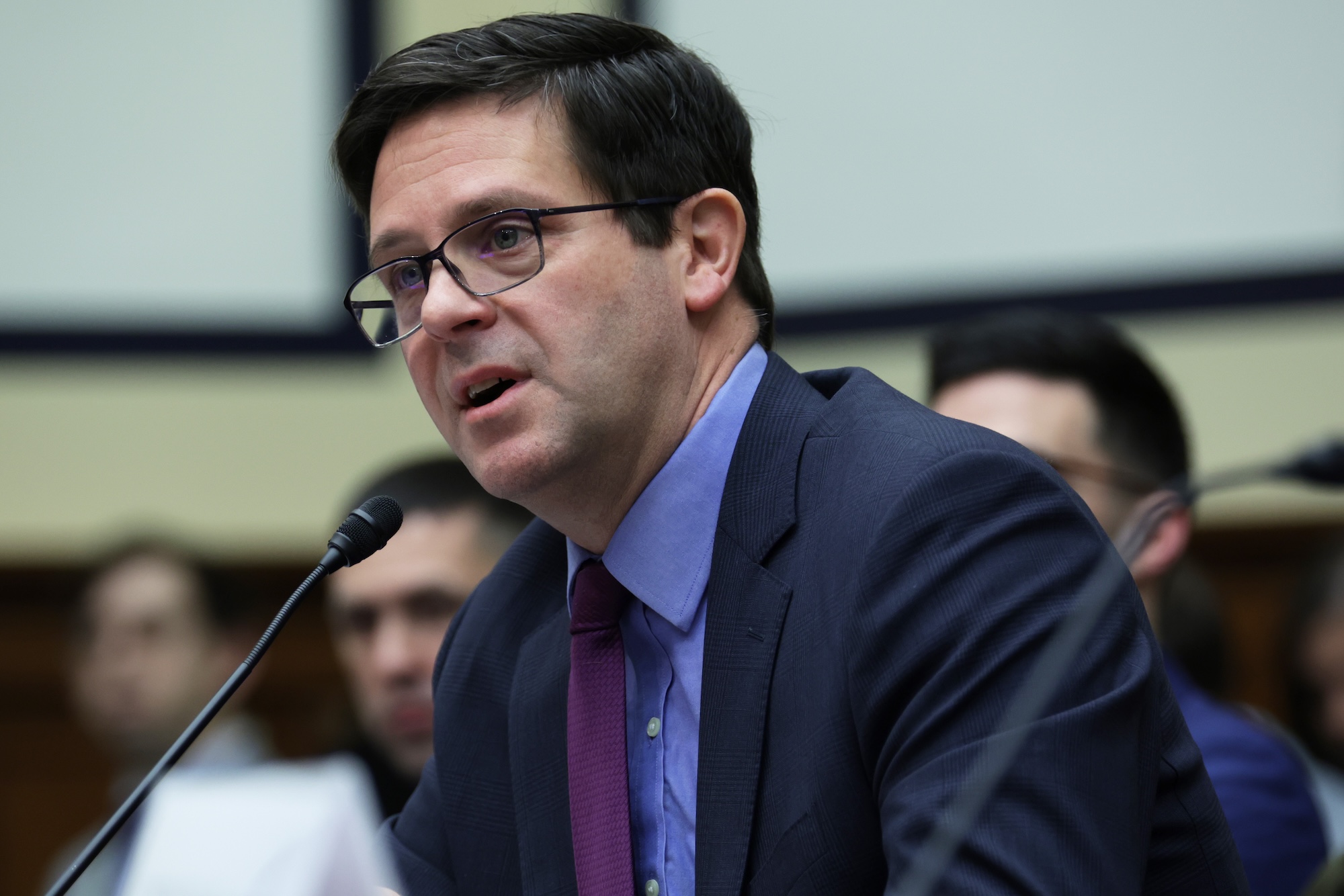
John Plumb, then-assistant secretary of defense for space policy, testifies before a subcommittee of the House Armed Services Committee on March 30, 2023.
Credit: Alex Wong/Getty Images
John Plumb, then-assistant secretary of defense for space policy, testifies before a subcommittee of the House Armed Services Committee on March 30, 2023. Credit: Alex Wong/Getty Images
“When you use the words Golden Dome, now it’s political, and when you politicize national security, you get a political response, so it is damaging,” said John Plumb, who supervised military space policy for the Biden administration, in a panel discussion at the CyberSat conference this week.
The Trump administration projects Golden Dome will cost $185 billion over the next 10 years, a figure that’s hard to verify with the scarce information military officials have released about how the system will work.
Other cost estimates are significantly higher. The Congressional Budget Office concluded that a national missile defense system meeting the requirements set out in Trump’s executive order would cost about $1.2 trillion. The American Enterprise Institute released a report last year with a menu of potential Golden Dome architectures, ranging from a quarter-trillion dollars (without SBIs) to $3.6 trillion at the high end.
Pentagon officials chafe at these numbers, claiming they do not take into account the military’s assumptions for low-cost launches and mass-produced satellite networks.
The shiny new thing
The military envisions at least hundreds, and perhaps thousands, of Space-Based Interceptors in the uppermost layer of Golden Dome. These interceptors would loiter in orbit to wait for a missile attack. SBIs have never been placed into orbit before, despite decades of research and development. The idea has been around at least since the 1980s, when former President Ronald Reagan pushed the Strategic Defense Initiative, or “Star Wars,” weapons program.
“The most ambitious element of Golden Dome is the Space-Based Interceptor layer, and that is going to face significant technical challenges,” said Sen. Mark Kelly (D-Ariz.), in a congressional hearing earlier this year.
“The cost, the physics, the likely reliability, in my view, do not support a full-scale space-based intercept architecture,” said Kelly, a former Navy combat pilot and astronaut. “This means that we could spend more than a trillion dollars and end up with a system that’s not going to work, and it’s not going to meaningfully improve our security.”
Some critics call out Golden Dome’s potential negative impact on global stability, fearing it could spark an arms race driving the world’s other nuclear powers to expand their arsenals. “It motivates the other side to just build more missiles because the easiest way to overcome a defense like that is just to buy more,” said Frank Kendall, who served as secretary of the Air Force in the Biden administration.
Others point to the risks of weaponizing space—a similar argument used against the Reagan-era Star Wars program. Secretary of the Air Force Troy Meink lifted that taboo in September with the first public disclosure that the US Space Force already has weapons in orbit.
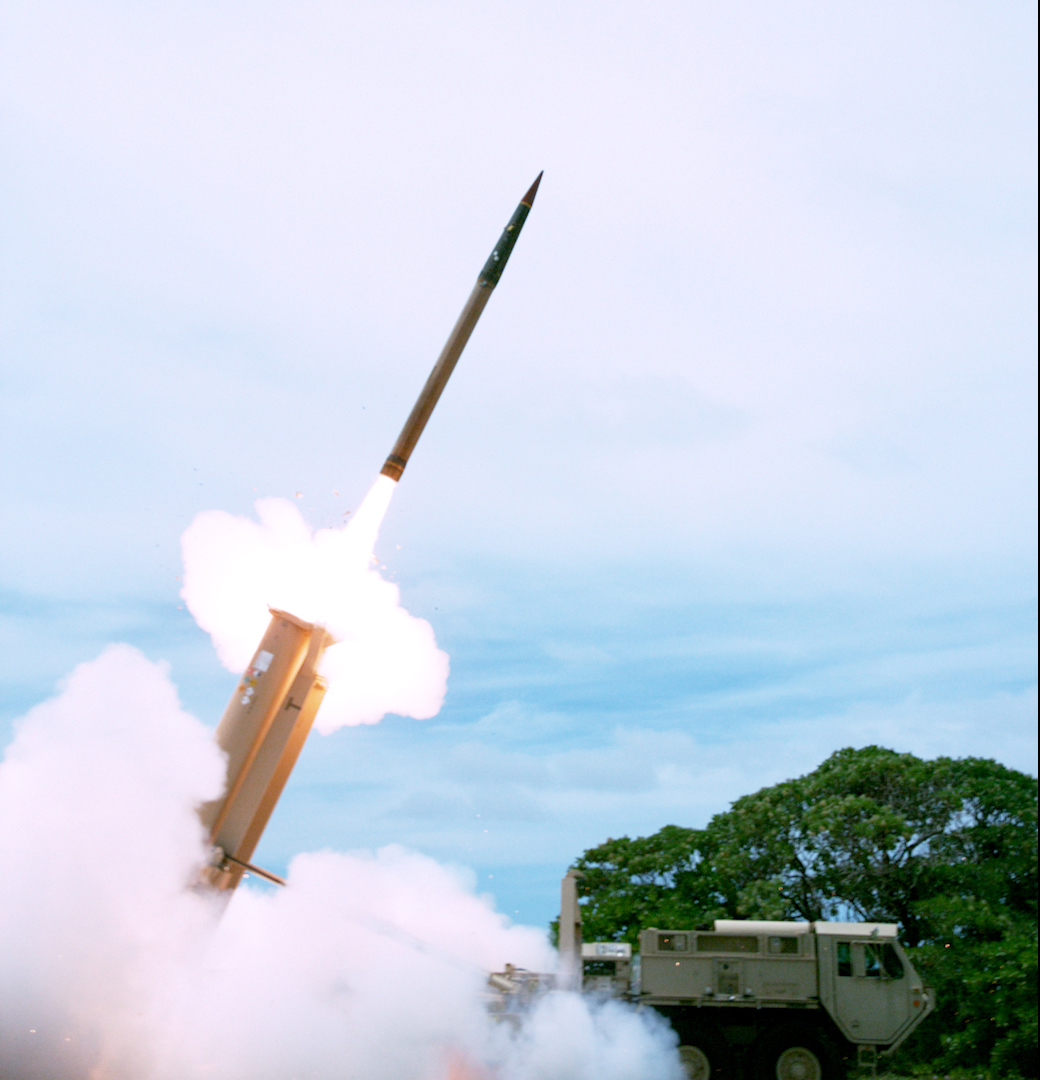
A ground-based Terminal High Altitude Area Defense (THAAD) interceptor is launched from the Reagan Test Site, Kwajalein Atoll in the Republic of the Marshall Islands, on a flight test on August 30, 2019. THAAD interceptors are currently operational, but they’re expensive, estimated to cost about $13 million per shot.
Credit: Missile Defense Agency
A ground-based Terminal High Altitude Area Defense (THAAD) interceptor is launched from the Reagan Test Site, Kwajalein Atoll in the Republic of the Marshall Islands, on a flight test on August 30, 2019. THAAD interceptors are currently operational, but they’re expensive, estimated to cost about $13 million per shot. Credit: Missile Defense Agency
But there’s more to the story than SBIs. The satellites and radars that detect and track missile launches are either in use today or were already in development during previous administrations. The same goes for Ground-Based Interceptors, which have been deployed for decades to take out missiles as they approach their targets. Under President Biden, the Pentagon’s Missile Defense Agency awarded Lockheed Martin a $17 billion contract to develop a next-generation Ground-Based Interceptor to defend against more sophisticated missile threats.
Optimism meets skepticism
The $24 billion Congress approved for Golden Dome last year was a one-time allocation for fiscal year 2026, which ended on October 1. The program’s funding dried up last month because the government is currently operating under a continuing resolution—an extension of last year’s regular military budget, which, of course, did not include the $24 billion Golden Dome infusion routed through reconciliation. The preliminary funding bills in the House and Senate for fiscal year 2027, if passed as-is, would provide only a fraction of the more than $17 billion the Trump administration requested for Golden Dome in this budget cycle.
That’s because the Trump administration again separated a significant part of its record $1.5 trillion topline military budget request into a reconciliation package outside of the normal congressional appropriations process. The supplemental $350 billion funding request—which included funds for Golden Dome—went nowhere in the Republican-controlled Congress. And it won’t happen when Democrats take the gavels next year, either.
It’s impossible to judge the realism of the Pentagon’s aim to get a first draft of Golden Dome up and running by the end 0f 2028, before the end of Trump’s presidency, because so much of the system is classified—but skepticism is the safer bet. Military officials have said little about Golden Dome’s design, architecture, or concept of operations, citing a national security imperative for secrecy.
One thing we do know is that a homeland defense shield like Golden Dome will need international partners to host radar sensors, ground stations, and missile batteries. Canada is an obvious target for such a partnership, and a fully deployed Golden Dome would notionally provide protection over all of North America.
However, this part of the program is off to a slow start. Michael Guetlein, the four-star Space Force general in charge of Golden Dome development, said earlier this year that tariffs—a core Trump administration policy—were limiting his interactions with foreign governments.
Gen. Michael Guetlein, direct report program manager for Golden Dome for America in the Office of the Secretary of Defense, appears before the House Armed Services Strategic Forces subcommittee on April 15, 2026, in Washington, DC.
Credit: Luke Johnson/Getty Images
Gen. Michael Guetlein, direct report program manager for Golden Dome for America in the Office of the Secretary of Defense, appears before the House Armed Services Strategic Forces subcommittee on April 15, 2026, in Washington, DC. Credit: Luke Johnson/Getty Images
The hardest problem
So what can we expect when the next Congress convenes with Democratic majorities in January? The consensus among the experts Ars interviewed is that military leaders will still push for new options in missile defense, a need they say is underscored by their experience during the US war with Iran and Russia’s persistent missile strikes on Ukraine.
Modern missiles and drones can easily dodge existing defense systems. The stark expense of existing Western interceptors compared to the cost of Iranian missiles and drones can make defenders think twice about whether to shoot or keep their powder dry for a future attack.
“I feel like the entire effort would benefit from a better problem statement,” one former military space official told Ars. “Why do we think we need something that we don’t currently have? What’s changed? What’s different? What is it?”
This official offered some answers to these questions: “We are not in the 1970s or 1980s anymore, where it was us and the Soviet Union. The vast share of strategic threats to us were strategic ballistic missiles that we could see coming. That’s how things used to be.”
“Today’s environment is different,” he continued. “You have a host of strategic threats that are making classic ballistic missiles shrink in share. You’ve got hypersonic weapons. You’ve got endo-atmospheric hypersonic vehicles. You have increasingly accurate and harder to detect cruise missiles. It’s no longer just Russia. It’s China now, and to a lesser extent, North Korea and Iran.”
These new missile threats and the ubiquity of one-way attack drones make US and allied bases more susceptible to attack, the official said.
“What do we do about it? Do we just build more Mutually Assured Destruction platforms, or is there something else we can do? I think that’s what gets you to maybe we should look at ways to at least interfere with a potential attack against us.”
But some parts of Golden Dome, if followed to the letter of Trump’s executive order, simply may not work, at least at the scale required for global coverage, the official told Ars. One of them is a requirement to develop SBIs that can destroy enemy missiles during their boost phase soon after launch. This is in contrast to midcourse intercept in space or terminal intercept as the missile homes in on its target.
“The boost-phase intercept is a much bigger challenge,” the former military official said. “I’m probably going to have to have an interceptor that can survive reentry, track through reentry, and hit something while it’s still in the atmosphere. Hitting something in midcourse, as it’s left the atmosphere and is in space is just an easier problem… The original executive order talked about boost-phase intercept, and I was always skeptical about that one.”
An SBI aimed at a boost-phase ballistic missile would have to look down toward the Earth, not up toward space. The interceptor would have to distinguish the missile it’s tracking against the background of Earth, with clouds, cities, land, and water. It’s much easier to do that against the cold blackness of space. There are some benefits to a boost-phase intercept. For example, the ballistic missile is traveling slower soon after launch, and you might have another shot to intercept it if you miss.
The window for intercepting a missile in boost phase is also exceptionally narrow. The time from a launch detection to a shoot-down decision might be less than a minute, and a commander charged with making a “kill decision” would likely want more time to understand what’s happening before pulling the trigger on an interceptor.
“When does the person who has the authority for weapons engagement release the weapon? If your answer is it’s all automated, that’s interesting, but it’s also a little scary,” the former military official said. “Now I’m going to explain to the president why you just killed three taikonauts (Chinese astronauts) coming off a launch pad because no human was there. If you do need a human to say, ‘OK, I authorize release of the weapon,’ then that’s a time gap.”
Guetlein, the man in charge of Golden Dome, has acknowledged this challenge.
“I do believe that the technology exists to get after that threat today, and we believe we can solve it, but… can I do it at scale, and can I do it affordably? That’s going to be the huge challenge for boost-phase intercept,” Guetlein told lawmakers in an April hearing. “I will tell you, because we are so focused on affordability, if we cannot do it affordably, we will not go into production.”
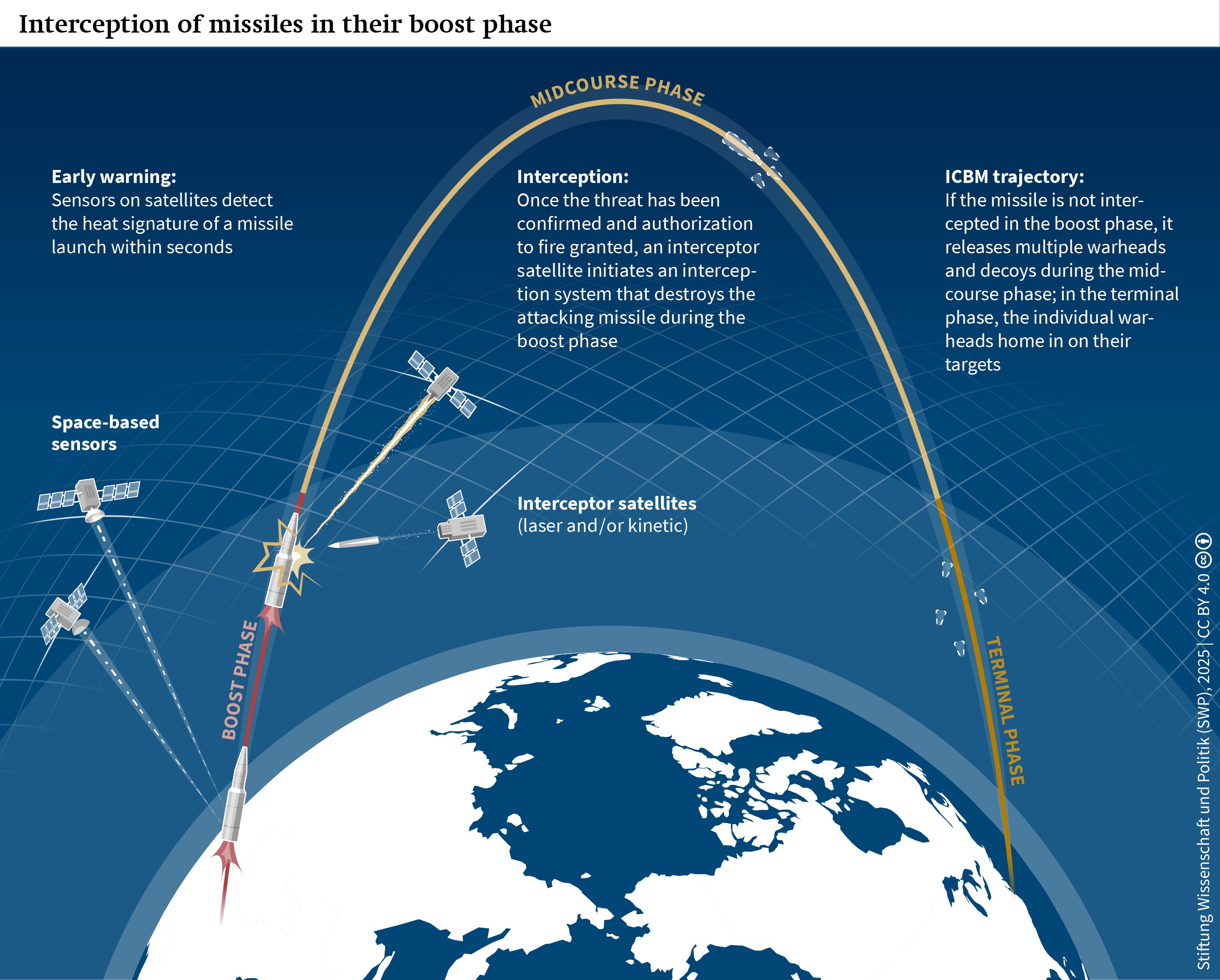
This infographic produced by the German Institute for International and Security Affairs illustrates the elements of a space-based missile defense system.
Credit: German Institute for International and Security Affairs (SWP), 2025/CC BY 4.0
This infographic produced by the German Institute for International and Security Affairs illustrates the elements of a space-based missile defense system. Credit: German Institute for International and Security Affairs (SWP), 2025/CC BY 4.0
There are other ways to take down missiles if engineers can’t close the case for boost-phase intercept, Guetlein said. “If boost-phase intercept from space is not affordable and [doesn’t] scale well, we will not produce it because we have other options to get after it.”
If proven feasible, directed-energy weapons using microwave or laser beams would provide US forces near-endless “magazine depth” in responding to massive salvos of missiles and drones, eschewing the need for “kinetic” SBIs for missile defense. Sen. Angus King (I-Maine) said in a hearing earlier this year that the Space Force should spend more on directed-energy research than on space-based kinetic kill vehicles.
Plumb, the former Biden military space policy chief, pointed to bipartisan support for the Pentagon’s existing missile defense programs, along with new initiatives to improve tracking hypersonic missiles. “I think any administration, Republican or Democrat, is going to continue to improve missile defenses for the US, 100 percent,” he said, adding that it is “probably unlikely” that SBIs survive the coming cull.
So what do the people actually building Golden Dome think? Their answer is similar. Some missile defense priorities will survive, but maybe with a new name.
The name Golden Dome is a “brand,” said Dylan Taylor, chairman and CEO of Voyager Technologies, which works with Anduril on SBIs. “It’s a proxy for layers of a protective onion, if you will, and there are elements of what is being called Golden Dome, where the technology is very advanced, and it works. The systems work. They’re more functional than I think people have reported on or have indicated.”
“Golden Dome is a lot more than SBIs,” said another executive at a space company working on the project. “It’s one layer and element. We believe that there’s bipartisan support for this capability because it is a required capability for national security. The question is whether it can be achieved at a price that makes it executable and palatable. The technical aspect of this closes, and there’s just a question about scalability and cost.”
The executive told Ars that newer, smaller space companies can do the job for less money than the Pentagon’s legacy contractors. Many companies are spending private capital on Golden Dome-related research and development with the promise of future Pentagon business. Military leaders have added stops on Wall Street and with venture capital firms to their usual tours of bases, command centers, and test ranges.
“There’s real hardware being built by all the players,” the official said, suggesting optimism about fielding a working preliminary version of Golden Dome by 2028. “From us, on our execution to date, we’ve conducted engine tests and thermal tests and communications tests.
“My fiduciary responsibility is to turn our investment into these critical technologies into future value, and I wouldn’t have made that call had I not been comfortable with the survivability of the program, assuming we can achieve the technical and financial targets, which we’ve convinced ourselves we can,” the official said.
Rocket Lab is another company with business ties to Golden Dome. The company’s founder and CEO, Peter Beck, told Ars he was convinced missile defense will remain a priority no matter who controls Congress or the White House.
“Is it a national security imperative that we go to the Moon? Probably not. Is it a national security imperative that we can protect the nation from incoming missile threats? Yes,” Beck said. “With these sorts of things, I’d say it’s what shape and scale they are, not whether they survive.”
“There are elements of Golden Dome that I don’t think are going to be politically vulnerable, and there will be other parts of Golden Dome that, of course, will be,” Taylor said. “The point I want to emphasize is people who say, ‘Well, Golden Dome is dead; the whole thing is dead,’ they don’t necessarily understand that there are four or five or six layers to the system, and some are vulnerable and some are not.”
Voyager’s expertise for missile defense is in advanced propulsion, and Taylor said those technologies are relevant for a range of systems, not just Golden Dome.
“There’s no doubt that whatever it’s going to be called, it won’t be called Golden Dome, and there will definitely be machinations in the system, but it won’t be a ‘throw the baby out with the bath water’ approach,” Taylor said. “Given the risk profile, I don’t see that happening.”
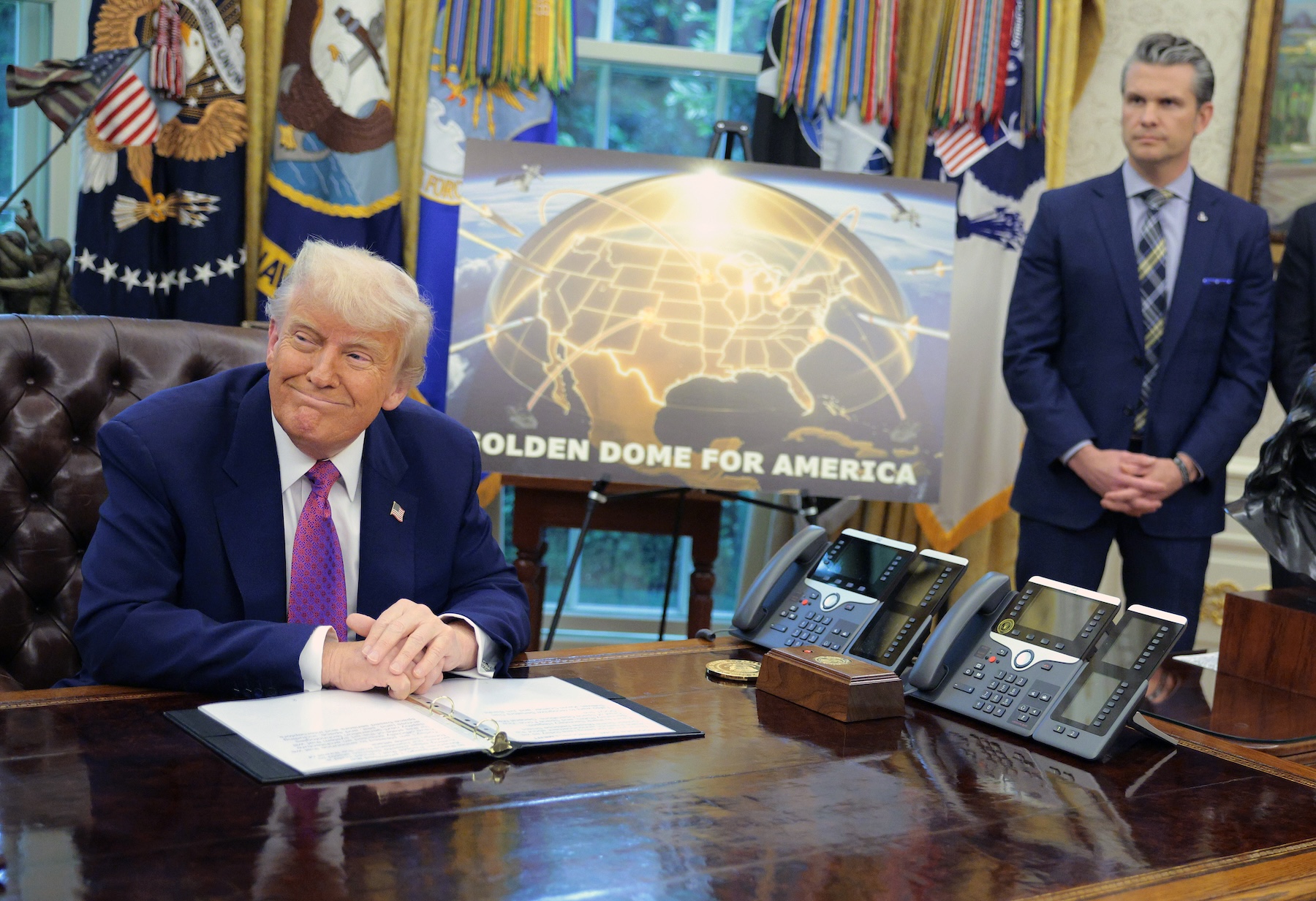
President Donald Trump speaks alongside Secretary of Defense Pete Hegseth in the Oval Office at the White House on May 20, 2025, in Washington, DC.
Credit: Chip Somodevilla/Getty Images
President Donald Trump speaks alongside Secretary of Defense Pete Hegseth in the Oval Office at the White House on May 20, 2025, in Washington, DC. Credit: Chip Somodevilla/Getty Images
In a Senate hearing in September, Tom Karako, director of the Missile Defense Project at the Center for Strategic and International Studies, proposed the idea of a name change as one option to “depoliticize” the missile defense issue.
“It is no secret that the ‘Golden Dome’ moniker has contributed to political polarization around the effort,” Karako said in his testimony. “Several options exist to depolarize and depoliticize the effort. It belongs to Congress to name or rename executive departments—witness the pending proposal to rename the Department of Defense as the Department of War. Congress likewise has legislative power to rename the Golden Dome initiative in a future national defense authorization act.”
“There are things in the program that make sense,” said Sen. Kelly, who serves on the Senate Subcommittee for Strategic Forces. These include new capabilities for “detecting launches,” he said. “The Space-Based Interceptor part is really, really hard, and the physics clearly favors the offense,” Kelly said. “We could go down this road, spend hundreds of billions of dollars, and not get any return on that investment, and missile defense is too important to pursue this just based on aspiration alone.”
Kathy Warden, the CEO of Northrop Grumman, acknowledged last year that with SBIs, “more invention is required than other parts of the [Golden Dome] architecture.”
The most recent trends in warfare, as seen in the Middle East and Ukraine, highlight the need for cheaper, mass-produced countermeasures to use against massive drone and missile attacks. In other words, it requires magazine depth, as some military commanders like to say. Democrats seem likely to conclude that the path to magazine depth does not include SBIs.
Stephen Clark is a space reporter at Ars Technica, covering private space companies and the world’s space agencies. Stephen writes about the nexus of technology, science, policy, and business on and off the planet.
Source: Ars Technica · Stephen Clark
At a glance
- Topic
- Politics
- Country
- 🇺🇸 US
- Publisher language
- EN
- Added to Allnira