still love a big sedan
BMW has updated its flagship sedan with the newest EV and infotainment tech.
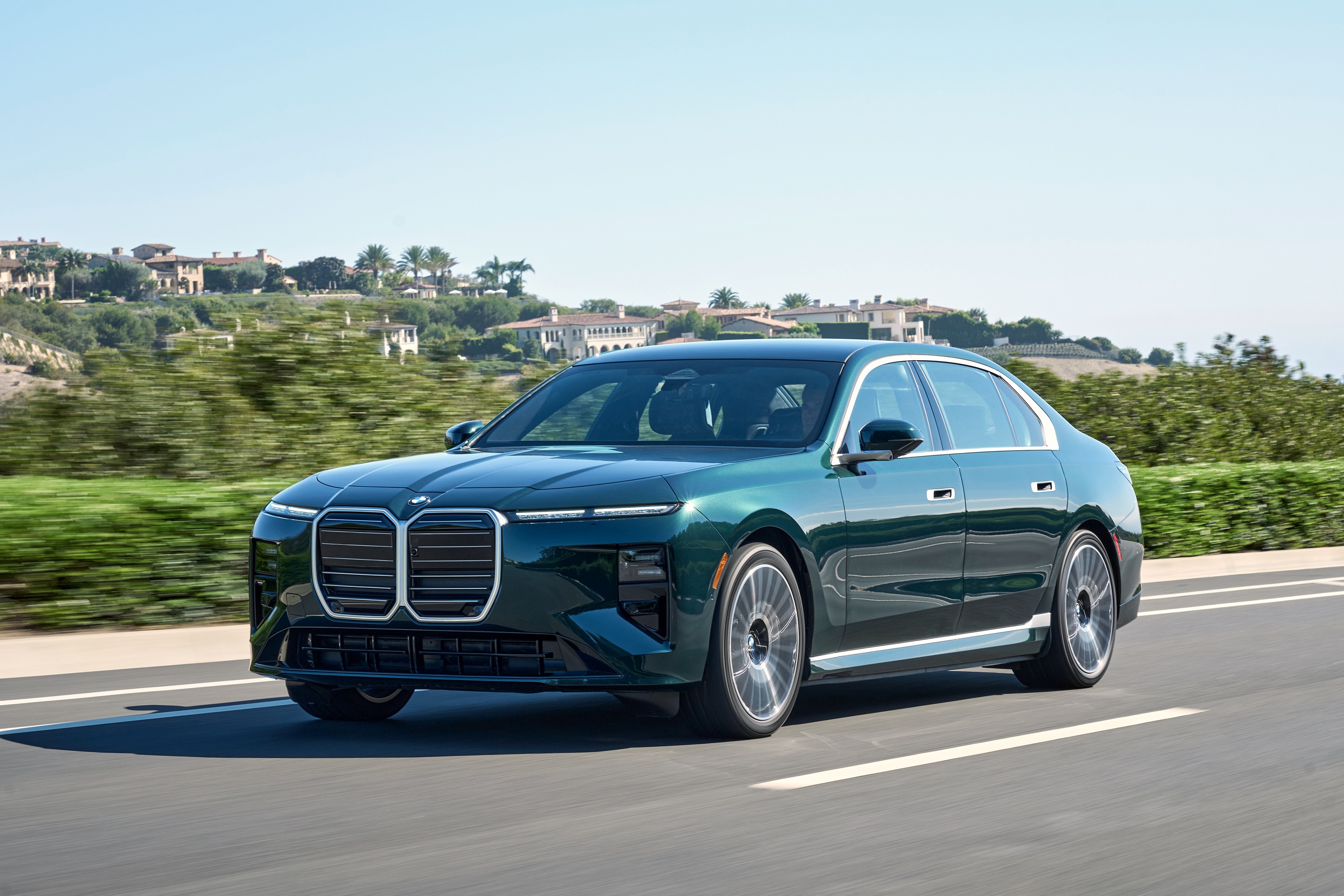
BMW tweaked the nose on the i7 for model-year 2027, but the changes are far deeper than that. Credit: Daniel Kraus/BMW
BMW tweaked the nose on the i7 for model-year 2027, but the changes are far deeper than that. Credit: Daniel Kraus/BMW
When BMW debuted the new 7 Series in 2022, it set a new standard for large luxury sedans, increasingly irrelevant though that class is. Rather than siloing off an electric alternative like Mercedes, with its EQS alongside the normal S-Class, BMW simply made the powertrain an option. Stick with a V8 if you want, or consider the rather good electric version instead—only subtle differences like the badging and lack of exhaust pipes give the game away.
Since then, BMW has brought out a string of even newer electric vehicles for the 5 and 3 Series (plus their SUV counterparts). It has switched from battery packs made of prismatic cells to more energy-dense arrangements of cylindrical cells. The motors are still electrically excited synchronous ones, but now the drive units feature silicon carbide inverters and more compact packaging.
This sixth-generation electric powertrain was designed for the clean-sheet Neue Klasse family, which also threw out the legacy cruft of dozens and dozens of discrete single-function electronic control units for a handful of powerful domain controllers. These computers take over those functions but with much faster processing power—and therefore more capabilities in terms of chassis control or powertrain efficiency—as well as the ability to be more easily updated.
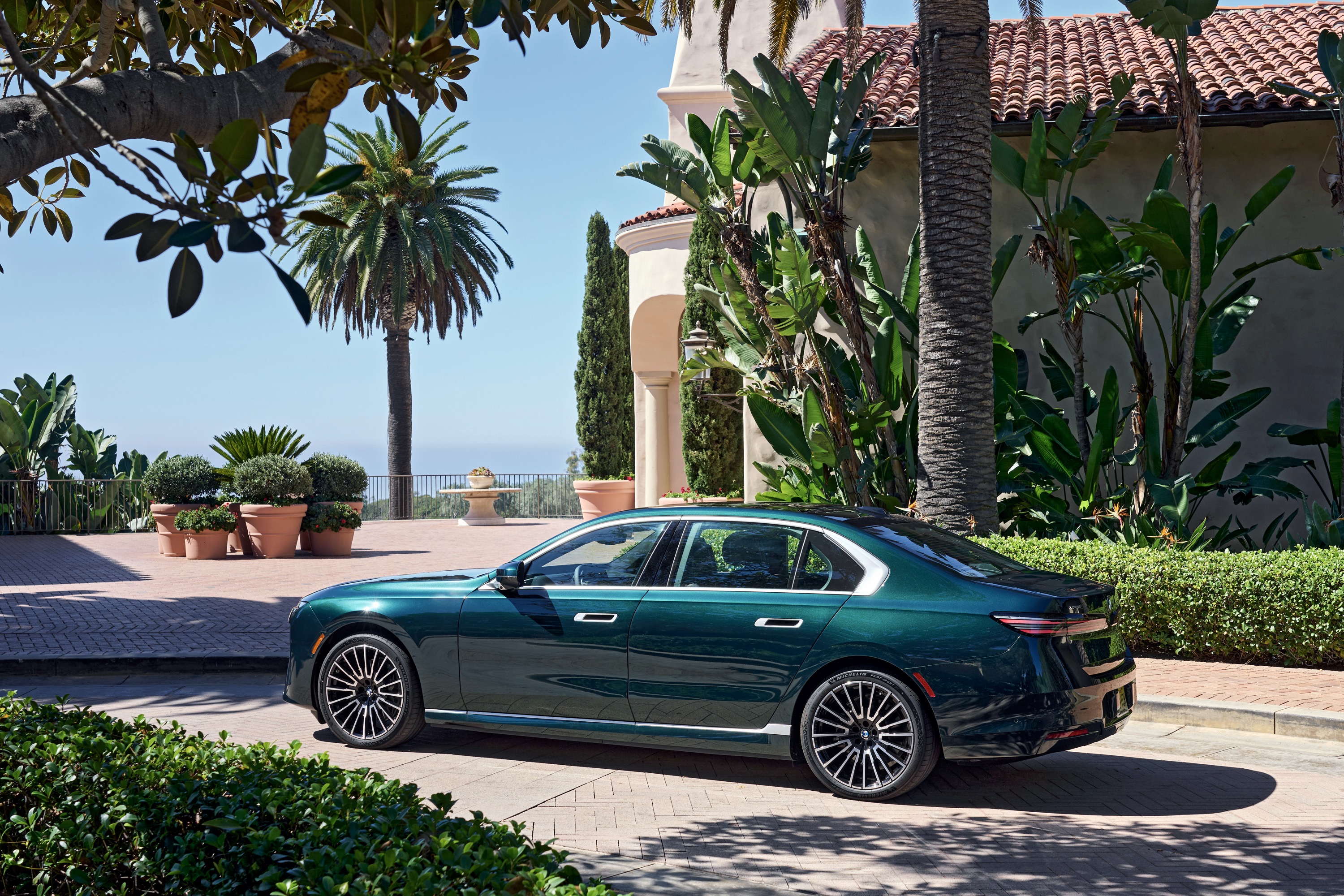
The sedan has a very high belt line.
Credit: Daniel Kraus/BMW
The sedan has a very high belt line. Credit: Daniel Kraus/BMW
Which could have left BMW with something of a problem—should the flagship be clearly outclassed in terms of power and energy density and range efficiency by, well, all the other EVs in the range? Clearly, the board decided the answer to that was no, and for the 7 Series’ midlife update, the i7 got some comprehensive surgery under the skin.
6th-gen power
Compared to the last i7 I drove, the 2027 model boasts a higher-capacity battery pack, now 112.5 kWh (net) up from 101.7 kWh, although BMW stuck with a 400 V architecture, unlike in the Neue Klasse or the iX5 we recently drove. A less-powerful 50 xDrive and a more powerful M70 xDrive will also be available, but at the first drive, I sampled the midrange 60 xDrive model, which features a combined 544 hp (400 KW) and 549 lb-ft (745 Nm), roughly equivalent to the pre-facelift car.
Despite that power and torque, the i7 60 doesn’t feel fast like a Porsche Taycan might, and you won’t want to hustle it down a mountain road the way you might the Porsche. The entire driving experience is waftier than that, with the car offering more of a magic carpet ride, a la the iX SUV or even that very fancy cousin of the i7, the Rolls-Royce Spectre.
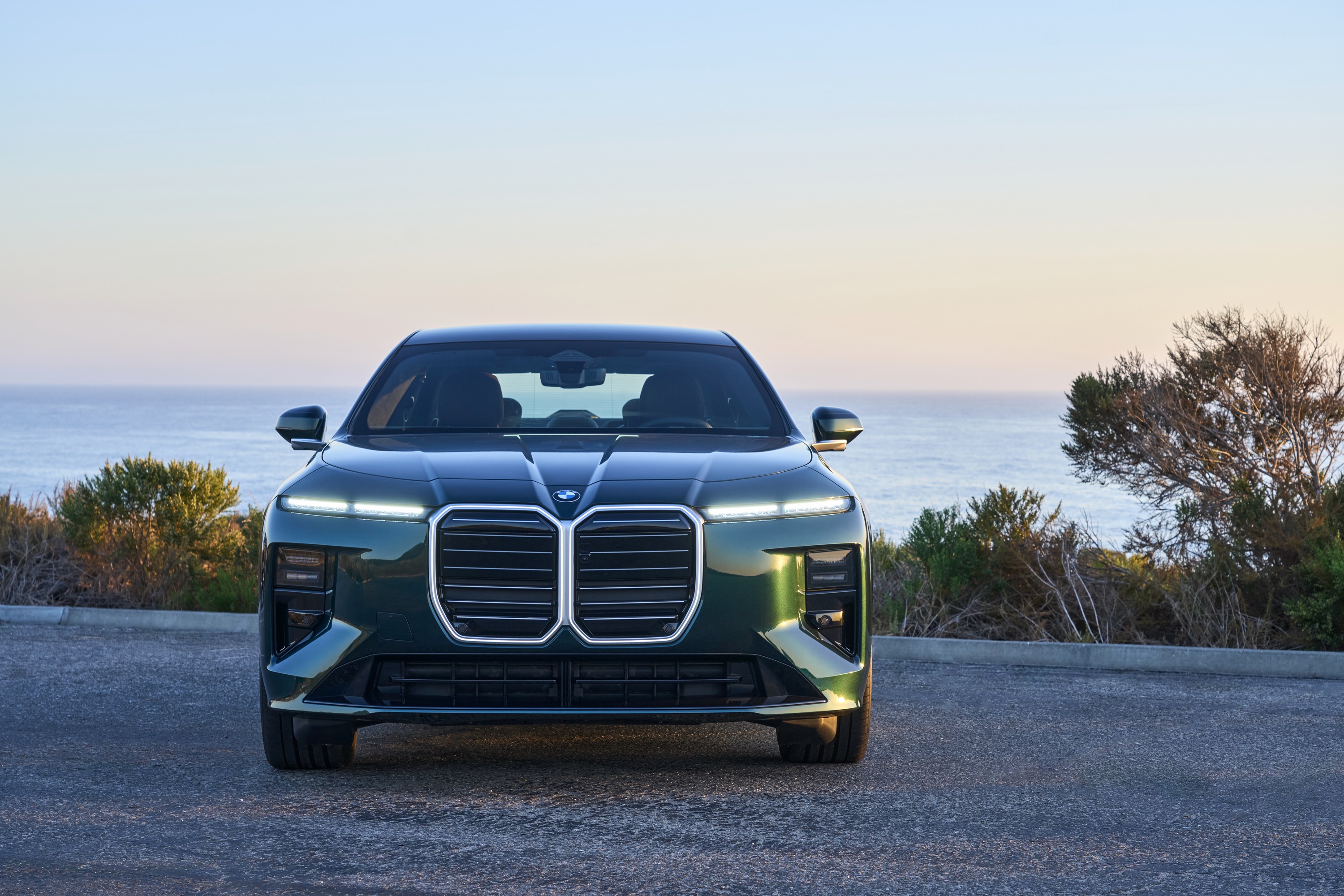
I can’t unsee the angry birds pigs.
Credit: Daniel Kraus/BMW
I can’t unsee the angry birds pigs. Credit: Daniel Kraus/BMW
Even with launch control, 0–60 mph takes 4.6 seconds. Once upon a time, this would have been considered excellent—the V12 750i of the mid-1990s needed at least two seconds more to do that job. But 30 years later, electric sedans from Lucid and Tesla and Porsche and a whole load of Chinese automakers will get you there in less than half the i7’s time, should you want that. If you’re looking for an outright speed machine that will rearrange your internal organs under acceleration, look elsewhere.
In fact, the i7 was remarkably relaxed; even with the traction and stability control turned down, it refused to chirp a wheel or even threaten to break loose in the dry at speeds considered acceptable on the road. But drive it in a more relaxed manner, and it rewards. The steering is precise, and it coasts beautifully on flat or downhill grades, a consequence of those EESMs that offer no resistance to the road when they’re not receiving a charge. The same very smooth regenerative braking to a stop that we experienced in the iX3 and iX5 shows up in the i7, too.
First drive events are never a good way to determine range efficiency, but BMW says between 344—362 miles depending on wheel size. With only a 400 V pack, DC fast-charging tops out at 250 kW (up from 195 kW), and a 10–80 percent charge takes about 28 minutes. Like other model-year 2027 BMW EVs, the i7 has a NACS charging port.
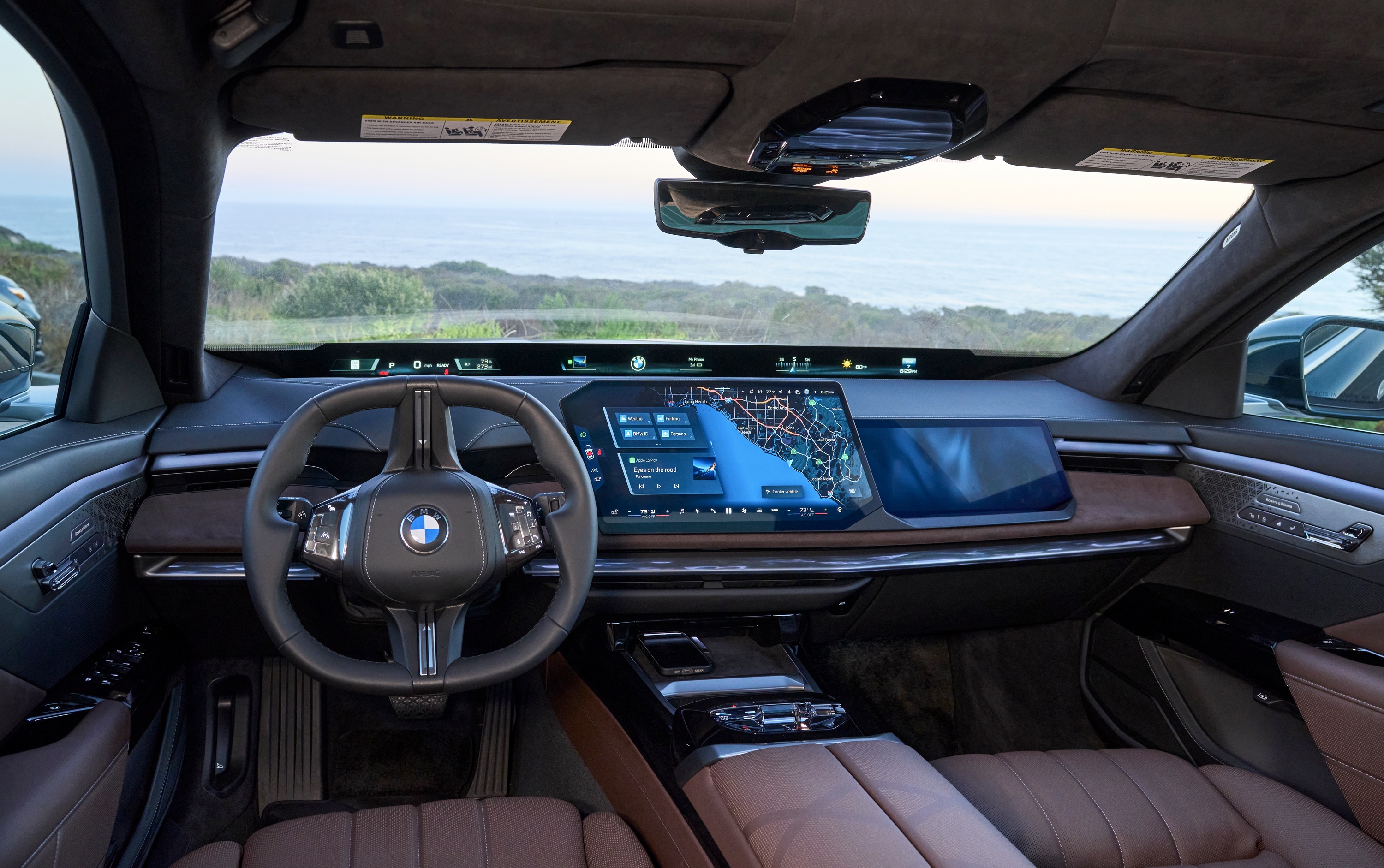
There’s a new steering wheel as well as the new displays.
Credit: Daniel Kraus/BMW
There’s a new steering wheel as well as the new displays. Credit: Daniel Kraus/BMW
The domain controller for the powertrain also helps efficiency by working with the route-planning software. BMW also runs AI simulations of the battery based on previous charging cycles when planning routes and picking charging stops along the destination and will even take the cost per kWH at different stations into account.
Infotainment upgrade
There was also some rather radical surgery in the cabin, with BMW’s new Panoramic iDrive screen running along the base of the windshield, and its new trapezoidal infotainment touchscreen replacing the older system that was inspired by boutique hotel interiors.
BMW also put in a new domain controller for the infotainment systems. The front passenger screen and theater screen that folds down from the roof for the rear passengers operate independently of each other and the main infotainment screen—logging in to YouTube or Disney+ on one will not log you in on the others, for instance. Watching content on the theater screen in the back is also a little more enticing in the abstract than the practical.
The 31.3-inch touchscreen boasts 8K resolution, but because of the aspect ratio of the screen, if you’re watching a movie—or perhaps F1 qualifying—it will only fill the middle third of the screen, with big black bars on either side. Plus, you have to tilt your head back quite a bit to look up at the screen. The Dolby Atmos sound system was impressive to my relatively cloth ears, though.
While BMW has increased the processing power, there was still some noticeable lag on the main infotainment screen. The Alexa-based voice recognition software was notably better than when I encountered it a few months ago in the iX3, however.
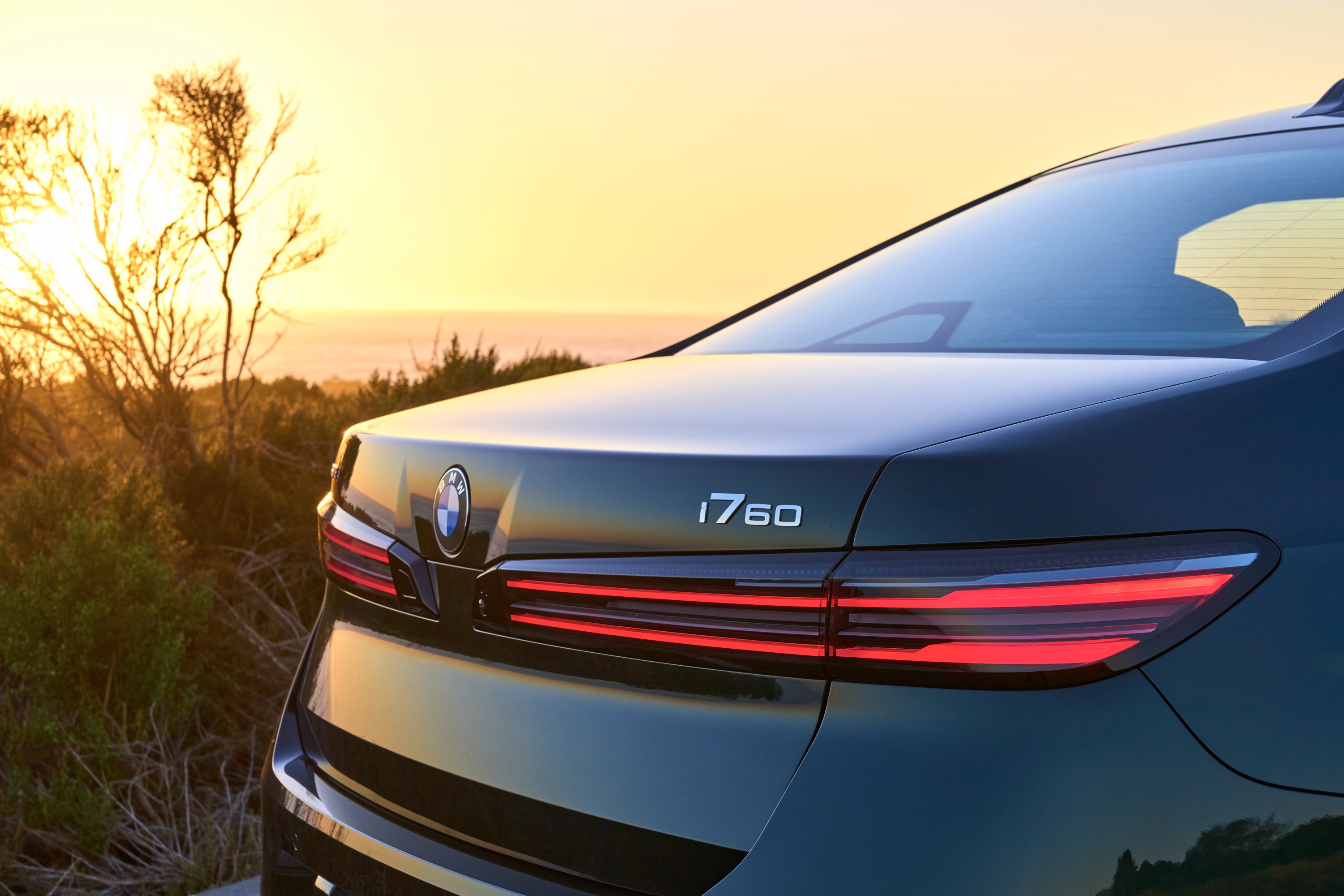
This, or a Lucid Air?
Credit: Daniel Kraus/BMW
This, or a Lucid Air? Credit: Daniel Kraus/BMW
The new i7 range starts at $106,200 for the 50 xDrive, or $124,700 for the 60 xDrive.
Jonathan is the Automotive Editor at Ars Technica. He has a BSc and PhD in Pharmacology. In 2014 he decided to indulge his lifelong passion for the car by leaving the National Human Genome Research Institute and launching Ars Technica's automotive coverage. He lives in Washington, DC.
Source: Ars Technica · Jonathan M. Gitlin
At a glance
- Topic
- Technology
- Country
- 🇺🇸 US
- Publisher language
- EN
- Added to Allnira